How Radar Changed the History of UFO Reporting
The spread of military radar in the 1950s turned a subject of visual reports into one of instrumented detection — and gave the archive its most weighted category of evidence.
For most of its history, the UFO record was a visual record: someone saw something. The arrival of military radar in the 1950s changed that, and changed the subject with it. Radar turned a matter of testimony into a matter of instruments — and, in doing so, gave the archive its most heavily weighted category of evidence, and a new set of problems to go with it.
Before radar: the visual record
The Second World War produced "foo fighters" — lights and objects reported by aircrew on all sides — but these were observations, made by eye, with no instrument to confirm them. The early post-war reports, beginning with Kenneth Arnold's 1947 sighting, were likewise visual. A witness could describe what they saw; they could not produce a record of it.
The radar age
The 1950s changed the ground. As radar networks expanded for the Cold War defense of North America and Europe, objects began to appear on scopes that operators could not identify. A sighting could now be a return on a screen — a position, a speed, a heading, a time — recorded and reviewable. The visual report and the radar return could be compared, and when they matched, the case became something new.
The 1952 Washington, D.C. incidents are the defining example: radar operators at Washington National Airport tracked targets over the capital, and Air Force interceptors were scrambled to them. The case sat in the record not because it was resolved but because it was instrumented.
Radar-visual cases
The combination of a radar return and a visual sighting of the same object at the same time — a "radar-visual" case — became the most weighted category in the field. The JAL 1628 encounter over Alaska in 1986 is a later example: a cargo crew's visual report matched, for minutes, returns from onboard and ground radar. In the Hynek classification (see A Field Guide to UFO and Close Encounter Classification), radar-visual cases sit at the top of the distance scale because they carry the most independent information.
The trade-off: precision and error
Radar brought precision. It also brought its own error modes. A radar scope can show "angels" — returns from temperature inversions and weather; "ghosts" — reflections and ducting; returns from birds, insect swarms, and vehicles on the ground. The Condon Committee, which examined the subject in the late 1960s, spent considerable effort on radar cases precisely because a radar return is not self-interpreting. An unexplained return is a return that has not been explained; it is not, by itself, a craft.
This is the central trade-off radar introduced. It made the record better and harder at the same time: better, because an instrumented sighting can be checked; harder, because the instrument has its own vocabulary of mistakes.
The modern inheritance
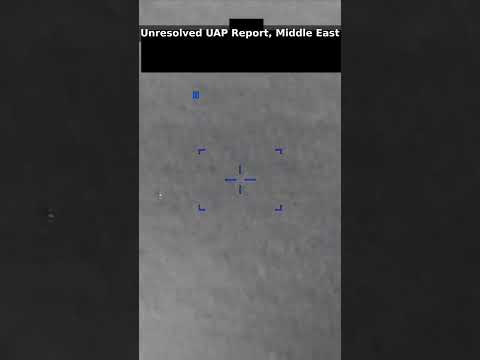
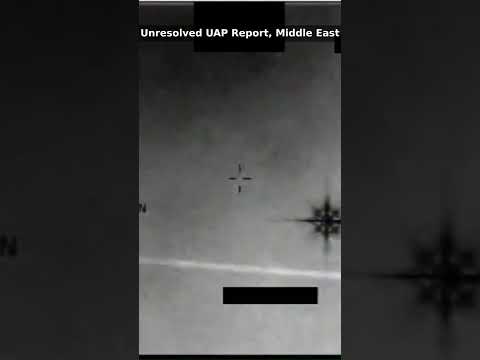
The modern UAP framework inherits the radar-era discipline. The Pentagon UAP videos are, at root, radar and infrared records, and the All-domain Anomaly Resolution Office works from sensor data rather than testimony. The shift that began in the 1950s — from eye to instrument — is now complete, and the archive's standards reflect it: the most weighted evidence is the evidence that can be independently checked, and the most checked evidence is instrumental.
What the change means for the record
Radar did not solve the subject. It re-organized it. Before radar, a report was a person's word. After radar, a report could be a person's word and a machine's trace, and the cases the archive holds in highest regard are the ones where both were present. The genuinely unexplained radar-visual case is rare — and it is rare precisely because radar made it possible to tell the explained from the unexplained more clearly than the eye ever could alone.
Related Records in the Archive
More in History
The History of the Modern UFO Era
From Kenneth Arnold's 1947 sighting to the modern UAP revival — how seventy years of reported sightings, government investigation, and cultural fixation shaped the record the archive now holds.
Kenneth Arnold and the 1947 Sighting That Invented 'Flying Saucers'
A private pilot's nine-object sighting over the Cascade Range coined "flying saucer" and opened the modern era of mass UFO reporting — and a useful lesson in how the press distorts witness testimony.