The Most Common Types of Reported UFO Shapes
A reference guide to the shapes most often reported across the record — discs, triangles, spheres, cigars, and formations of lights — and what is usually behind each.
This is a reference guide, not an argument. It catalogs the shapes most often reported across the record and, for each, the ordinary objects most often responsible when the report is explained. The point is not to dismiss reports; it is to make the genuinely unexplained easier to see by removing the things that are routinely mistaken for it.
Discs and saucers
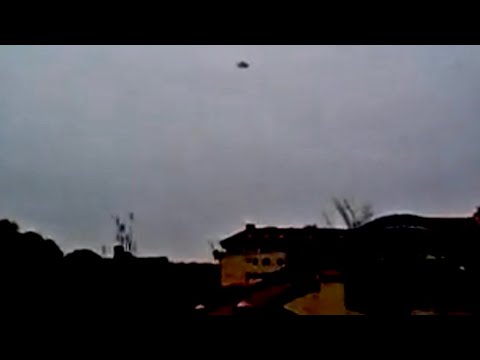
The classic shape, dominant from 1947 into the 1960s and still reported today. When explained, discs most often turn out to be lenticular clouds, weather or research balloons seen at an angle, aircraft banking so that wings and fuselage merge into an oval, or reflected light. A disc seen hovering in daylight near an airport is, on the record, most likely an aircraft.
Triangles
Large, dark triangles with three lights became prominent in the late 1980s and 1990s (see the Belgian UFO Wave). When explained, they are most often large aircraft — including experimental or military airframes with a triangular planform — seen at night, or parachute flares in formation (the later Phoenix Lights). The triangle is one of the shapes most improved by radar or a second witness; a single nighttime visual of a triangle is hard to read.
Spheres and orbs
Round, ball-like lights, sometimes reported as metallic or glowing. The common explanations are the planet Venus (notoriously bright and often reported), Jupiter, high-altitude balloons, satellites catching the sun, and glints off distant aircraft. A sphere that holds a fixed position relative to the horizon for minutes is almost always astronomical.
Cigars and cylinders
Elongated, featureless shapes. These are frequently clouds (especially lenticular or contrail remnants seen edge-on), airships and blimps, or aircraft seen from the side with wings foreshortened. A "cigar" that moves slowly and steadily across the sky is often a distant airship.
Lights and formations
The dominant report of the camera-phone era: points and groups of light with no resolved body. The usual sources are satellites, the International Space Station, Starlink and similar satellite trains, drones (including commercial lighted drones at night), aircraft landing lights, and flares. Lights are the hardest category to interpret, because a point of light carries the least information. They are also, by sheer volume, the most common report.
The "tic-tac"
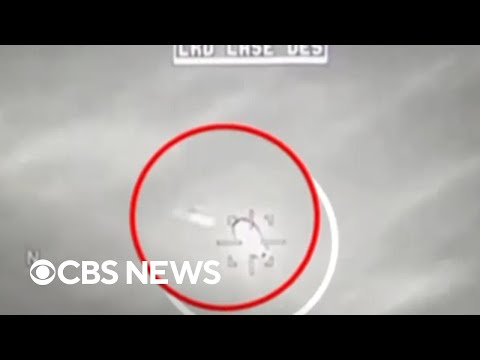
A smooth white oval, named after the mint, that entered the vocabulary through the 2004 Nimitz encounter and the Navy UAP videos. In the record so far, the tic-tac is rare and appears in instrumented rather than casual reports. It is included here for completeness; it does not yet have a settled conventional explanation, and the archive treats it accordingly.
How to use this guide
A reported shape is a starting point, not a conclusion. The shape tells you what to check first. A disc near an airport suggests an aircraft; a triangle at night suggests large aircraft or flares until ruled out; a steady sphere suggests an astronomical object. The genuinely unexplained case is the one that remains after the ordinary candidate for its shape has been considered and does not fit — and that case is rarer, and more valuable, than the volume of reports suggests.
For the deeper question of why shapes vary by era, see Why So Many UFO Reports Look Different. For the citizen observer's version, see A Short Field Guide to UAP Misidentification.
Related Records in the Archive
More in Phenomena
Why So Many UFO Reports Look Different
Sightings are reported as saucers, triangles, lights, cigars, and spheres — often in different proportions in different decades. What the variation in reported shape tells us about the record.
What Does UAP Actually Mean?
The shift from 'flying saucer' to 'UFO' to 'UAP' is more than rebranding. Each term carries a different relationship to evidence, and to what the speaker is willing to claim.
Nordics, Reptilians and Greys: How Alien Taxonomy Developed
The reported beings of the contactee and abduction eras were not always Greys. How the tall, human-like Nordics, the Gray beings, and the later Reptilians each rose to prominence.
Grey Aliens: Origins of the Modern Archetype
The small, large-headed, black-eyed being is the most recognized alien in the world. Tracing where the image came from — and how it became the default.